
Mortgage Rates Aren’t Just About the Fed

Why Mortgage Rates Aren’t Just About the Fed (And Why So Many Homeowners Feel Stuck)

A lot of people think mortgage rates are controlled by the Federal Reserve. They’re not. The Fed influences rates—but it doesn’t directly decide what your mortgage rate is going to be. And that’s where a lot of the confusion comes from.

Mortgage rates are heavily tied to the bond market—but not in a passive way. Lenders are actively pricing loans to compete for investor money. When a mortgage is created, it’s usually not held by the lender long-term. It gets packaged into a mortgage-backed security and sold. That means the lender has to make that loan attractive enough for someone else to buy.

And investors aren’t just choosing between mortgages and nothing—they have options. Government bonds, corporate bonds, stocks, and other investments are all competing for the same money. So if those alternatives start offering better returns, mortgage-backed securities have to keep up. And the only way to do that is by increasing the return those loans generate—which means higher interest rates for borrowers.

It’s not automatic. It’s a choice. Lenders are constantly adjusting rates to stay competitive in a broader marketplace where capital flows to whatever offers the best balance of risk and return. If they don’t, investors take their money elsewhere—and the system stops working.

The Fed still matters—but more behind the scenes. When the Fed raises or lowers rates, it affects the overall economy. One of the biggest things it impacts is inflation. And inflation is a big deal when it comes to mortgage rates. If inflation is high, lenders and investors want higher returns to make up for the fact that money will be worth less in the future. That pushes mortgage rates higher.

That’s why sometimes you’ll hear the Fed “paused” or even “cut rates,” but mortgage rates don’t really move much. They’re reacting to a bigger picture.

Now here’s where this really hits home for a lot of people. A huge number of homeowners locked in rates in the 2–3% range over the past few years. Those are incredibly low rates.

So now imagine this: you have a 3% mortgage. You’re thinking about moving. But today’s rates are closer to 6.5% or 7%. Even if you buy a similar-priced home, your monthly payment could jump significantly.

That’s what makes people feel stuck. It’s not that they can’t move. It’s that moving feels like taking a step backward financially.

And when a lot of homeowners feel that way at the same time, fewer people sell. That means less inventory on the market. And when inventory stays low, prices don’t drop the way people expect—even when rates are higher.

But being “stuck” isn’t always as black-and-white as it feels. Sometimes moving still makes sense. Life changes. Jobs change. Families grow. Priorities shift. And in some cases, the decision isn’t just about the interest rate—it’s about the bigger picture.


There are also different ways people approach it. Some keep their current home and turn it into a rental. Others look into ways to reduce their rate on a new purchase. Some use their equity to offset the higher cost of borrowing. There’s no one perfect solution—it depends on the situation.

The main thing to understand is this: mortgage rates aren’t controlled by one single thing, and they don’t always move the way people expect.

So waiting for the “perfect time” based on headlines alone doesn’t always work. The people who make the best decisions in this kind of market are the ones who understand how the pieces fit together—and make a move when it makes sense for them.

Because in today’s market, understanding what’s really going on isn’t just helpful. It can save you from making the wrong move—or missing the right one.


Why Real Estate Looks Easy, But Isn’t.


No two real estate deals are ever the same—and that’s why real estate isn’t easy.

People love to say real estate is easy. That agents just “unlock doors” and collect a commission at the end. I get why it looks that way—from the outside. But what most people never see is what actually happens once you’re in escrow, when things stop being hypothetical and start becoming very real… very fast.

Every transaction looks clean on paper. Buyer. Seller. Contract. Timeline. Simple. Until it’s not.

I’ve been in deals where the buyer and seller had completely different expectations about timelines—and neither would budge. Loan approvals hit unexpected issues days before closing. Inspections turned up problems that one side thought were serious, and the other thought were nothing. Contingency deadlines were misunderstood, missed, or ignored—something that alone can derail everything. Sometimes one party is responsive and proactive while the other disappears for days at a time. And that’s just the normal stuff.

Then there’s everything else no one talks about. Tenants in the property who refuse to leave. HOA issues where paperwork goes missing and approvals have to start over from scratch. Sellers stuck out of the country needing to track down a U.S. consulate just to sign documents. Major life events happening during escrow that change everything overnight.

And sometimes… it goes far beyond what most people would ever expect to deal with in a real estate transaction.

The kind of situations where timing, liability, and decision-making all collide at once—and there’s no handbook for what to do next. The kind of moments where if you hesitate, the entire deal collapses… or worse, creates legal and financial consequences that follow people long after closing.

I don’t get into specifics on those publicly. But I will say this—some of the situations I’ve had to navigate would completely blindside someone who thought this process was just paperwork and signatures.

And in those moments, there’s no pause button. You’re making real-time decisions with real consequences.

Here’s another layer people don’t think about: sometimes the difficulty isn’t just the transaction—it’s the people on the other side of it.

You’ll run into agents who simply don’t have the experience yet. That’s not a knock—I was new once too—but there’s a difference between being new and being unprepared. When that happens, you don’t just manage your side of the deal… you end up guiding the other side through it as well. Sometimes that’s fine. Sometimes it’s a lot. But you do it anyway, because your responsibility is to your client, and if the deal falls apart, they’re the ones who pay for it.

There are also plenty of agents who stay in a very specific lane—and they do well in it. But when you’ve handled a wide range of situations across different types of transactions, you start to see patterns, risks, and solutions that don’t show up in more routine deals.


Then there’s the reality of the market itself. In a hot market, you might be competing against 20, 30—sometimes even more—offers. In those situations, it’s not enough to just submit paperwork. You have to find ways to stand out. That can mean building rapport with the listing agent, making the call, presenting your buyer as the most reliable, most likely to perform. There are no guarantees—but effort matters. Strategy matters. And sometimes, yes, you go out of your way in ways that aren’t exactly comfortable, because that’s what it takes to give your client an edge.

On the flip side, when buyers are scarce, the dynamic changes. Now you’re working to make your seller’s property stand out, and sometimes that means navigating relationships from the other direction. Different market, same pressure to perform.

And beyond all of that, there’s the knowledge side of the business—something most people never see. Different types of sales come with entirely different rules. Probate. Short sales. 1031 exchanges. Property tax implications. Exemptions. You’re not an attorney or a CPA, but if you’re good at what you do, you understand enough to guide your clients in the right direction and know when to tell them to bring in the right professionals. And then there’s disclosure—something a lot of people don’t fully understand until it becomes a problem.

Once you have knowledge of something affecting the property, you don’t get to just ignore it because a deal fell apart. If a buyer orders inspections and those reports get shared with the seller—even if they seem exaggerated or outright wrong—that information doesn’t just disappear when that buyer walks away.

In many cases, you’re still required to disclose it to the next buyer.

That’s where things get tricky. Now you’re trying to explain why a previous report might not be accurate, while the next buyer is looking at it as a potential red flag. And whether it’s a termite report, a property condition issue, or something else entirely, there can be a paper trail that doesn’t just go away.

This is one of those areas where people going it alone often don’t realize the level of responsibility they’re taking on—and the potential consequences of getting it wrong.

Then you step into something else entirely—design, strategy, and return on investment. Advising sellers on what to fix, what to leave alone, what actually adds value, what buyers will respond to. Paint colors, finishes, presentation. At that point, you’re not just an agent—you’re helping shape the product.

And sometimes, even when you do everything right, things still go sideways.

You refer someone you’ve trusted for years. They give a quote. You present it. Everyone agrees. The deal moves forward. Then the numbers change midstream and there’s no time to renegotiate without putting the entire transaction at risk. So you step in and handle it, because your client trusted your recommendation and the deal needs to close.

Here’s the reality: none of this means the agent did anything wrong. This is just what happens when you’re coordinating multiple people, timelines, financial institutions, legal obligations, and emotions all at once, with real money and real liability on the line.

When something goes sideways, it’s not just stressful. There are legal implications, contractual consequences, financial risk, and real liability exposure. That doesn’t fall on a Reddit thread or a YouTube video—it lands on the people involved in the transaction.

And in the middle of all of it, the agent’s role becomes a lot more than people expect. You’re not just negotiating. You’re managing personalities, translating between parties who don’t trust each other, keeping timelines from collapsing, solving problems no one planned for, and sometimes just keeping the whole thing from blowing up. There are moments where it feels less like real estate and more like crisis management.

But here’s the part that matters: there is almost always a solution. Not always the original plan. Not always clean. Not always easy. But there’s usually a path forward—if you know how to find it.

That’s the difference. It’s not about whether problems come up. They will, every time. It’s about whether you have someone in your corner who knows what matters, what doesn’t, when to push, when to step back, and how to actually get a deal across the finish line when things get messy.

And then there’s the marketing side—something that can make or break how a property is perceived before a buyer ever steps inside.

Professional photography, presentation, and how a home is positioned online all play a huge role in the kind of attention it gets. I spent years refining that side of the business—investing in equipment, learning advanced lighting techniques, and putting in the time to produce images that actually stood out. It wasn’t uncommon for other agents to ask who my photographer was, not realizing I was doing it myself.

The process could be intensive. Multiple exposures, controlled lighting, careful composition—sometimes spending hours on a single shot to get it right. That level of detail made a difference in how a property was perceived.

Today, a lot of that process has become more accessible. Tools have improved. Technology has changed what’s possible, and it’s easier now to produce strong visuals without the same level of time investment.

But even with all of that, the underlying principle hasn’t changed: how a home is presented still directly impacts how buyers respond to it.

And more importantly—it highlights something else.

The parts of this job that look complex from the outside have become more streamlined over time. Everything else hasn’t.

Because real estate isn’t hard when everything goes right. It’s hard because of everything that can go wrong—and most of it, you’ll never see coming.

Over the years, I’ve handled a wide range of these situations—often while keeping my fees more client-friendly than what’s typical—because I’ve always believed the real value isn’t just getting a deal to close, it’s how you navigate everything that happens along the way.

Most people think real estate is simple—until they’re the ones in the middle of it. The difference isn’t whether problems happen—it’s who knows how to handle them when they do.

What AI Can & Can’t Replace in Real Estate

What AI Can—and Can’t—Replace in Real Estate

There’s no question that technology—and now AI—has changed real estate. A lot of the things that used to take serious time, skill, and effort are faster, easier, and more accessible than ever. Photography, marketing, listing descriptions, data analysis—tools have made all of it more efficient. And that’s not a bad thing.

In many ways, it’s made the process better. Faster turnaround, better presentation, more information available to buyers and sellers. The barrier to entry for producing quality marketing has dropped significantly. But that only tells part of the story.

Because the parts of real estate that have been streamlined were never the hardest parts to begin with.

AI can help write a listing description. It can enhance photos, improve lighting, clean up images, and even generate marketing materials in seconds. It can analyze market trends, suggest pricing ranges, and pull comparable sales faster than any human ever could. All of that is real, and all of it is useful.

But here’s what it can’t do.

It can’t sit in the middle of a deal where both sides are frustrated and not speaking to each other and figure out how to keep it together. It can’t navigate a situation where timelines are collapsing, lenders are asking for new documentation, and one party is about to walk. It can’t read the room when a negotiation is going sideways and know when to push, when to hold, or when to change strategy completely. It can’t pick up the phone, build rapport with another agent, and position a client as the one who’s actually going to perform in a competitive situation. And it definitely can’t take responsibility when something goes wrong.

That’s the part people miss.

Real estate isn’t difficult because of the parts you can automate. It’s difficult because of the parts you can’t predict.

Every transaction has moving pieces. People with different goals, timelines, personalities, and levels of urgency. Financial institutions with their own requirements. Legal obligations that don’t bend just because something becomes inconvenient. And when those pieces don’t line up—and they often don’t—someone has to step in and figure out how to move things forward, in real time.

AI doesn’t carry liability. It doesn’t have skin in the game. It doesn’t have to make a judgment call knowing that the outcome could affect someone financially, legally, or emotionally. A real estate transaction isn’t just a process—it’s a series of decisions, and those decisions don’t always come with clear answers.

That’s where experience shows up—not in perfect situations, but in imperfect ones. When something unexpected happens and there’s no obvious next step. When the “right” answer isn’t written anywhere, and you have to rely on judgment, pattern recognition, and the ability to manage people under pressure.


Technology will continue to improve. AI will continue to take over more of the visible parts of the business. And that’s fine.

Because the real value in real estate has never been in the parts that are easy to see.

It’s in the moments when things don’t go according to plan. When decisions matter. When timing matters. When experience matters.

AI can make real estate look easier. It just doesn’t make it simple.

Top 10 Southern California Beaches

A Detailed Guide to the Sand, Surf, Community, and Coastal Housing

Southern California beach culture is not one thing. It is 10 different Saturdays, 10 different sunset rituals, and 10 very different real estate markets packed into a single stretch of coastline. Some beaches are built for long surf sessions and barefoot afternoons. Others are more about volleyball, stroller walks, fire rings, harbor views, or postcard-level luxury. Below is a fuller version of the guide, with more texture on what each beach actually feels like to visit and what the surrounding community is like to call home. Housing figures below use recent research at the city level from February 2026, so they are a snapshot rather than a promise of current pricing.

1. Malibu — Zuma Beach and the wider Malibu coastline

If you want the classic big-sky, big-sand Southern California beach day, Zuma is one of the strongest picks on the entire coast. It is wide, long, and built to handle crowds better than many prettier-but-tighter coves. Official county information notes 1.8 miles of beach frontage, about 105 acres, roughly 2,000 parking spaces, food stands, showers, restrooms, and volleyball nets, which is a big reason it works so well for families, groups, and long summer days. Zuma is also known for swimming, boogie boarding, surfing, and even kite surfing, so it feels active without being overly urban.

Surf-wise, Malibu is famous for point breaks, but Zuma itself is more of a broad, punchier beach experience than the slower, more polished longboard image many people associate with Surfrider. It can be good for bodyboarding and beachbreak surfing, but it is also a place where conditions can get more powerful than casual visitors expect. The busiest hours are usually late morning through sunset on warm weekends, especially in summer. What Zuma does not really trade on is the evening bonfire scene; official county amenity listings highlight volleyball, showers, and food service, but not fire rings. That helps define the vibe: a daytime beach first, less of a nighttime hangout than parts of Orange County.

The surrounding Malibu community is exactly what people imagine: canyon roads, ocean-view homes, celebrity privacy, equestrian pockets, and a lifestyle centered on scenery rather than walkability. The real estate market remains elite even by California standards. Research indicates Malibu’s median sale price at about $3.68 million in February 2026, with homes taking about 120 days on average to sell. In plain English, Malibu buyers are paying for coastline, land, and identity as much as square footage. ()

2. Santa Monica State Beach

Santa Monica is the opposite of secluded. It is one of the most public-facing, iconic beaches in California, and that is exactly the appeal. The official city page describes more than three miles of beach and 245 acres of sand. California State Parks notes volleyball, basketball, picnic areas, shops, the pier, and the running strip along the beach. This is one of the easiest beaches to enjoy if your group wants different things at once: some people can swim, some can bike, some can walk the promenade, and someone else can disappear onto the pier for food or arcade time.

In the water, Santa Monica is approachable for casual swimming and occasional surfing or paddleboarding, though it is less of a surf-destination identity beach than some of the others on this list. Visitor guidance from Santa Monica tourism notes Fridays, Saturdays, and holiday weekends are often the busiest, while midweek is calmer. Santa Monica shines more as an all-day activity beach than a pure surf beach. It is also not a major fire-pit beach; the official pages emphasize volleyball, basketball, running, and pier activities rather than bonfire infrastructure.

The surrounding community is one of the best examples of true coastal urban living in Southern California. You get beach access, shopping, dining, employment density, and a more walkable daily life than at many other luxury beach markets. Housing is expensive but more varied than Malibu, with condos, apartments, and single-family neighborhoods all in the mix. Research indicates Santa Monica’s median sale price at about $1.82 million in February 2026, with homes averaging 58 days on market. Buyers here are often paying for a coastal city lifestyle as much as the beach itself.

3. Manhattan Beach

Manhattan Beach is one of the most balanced beach towns in Southern California. It has surf, a strong downtown, a handsome pier, and a civic identity that feels polished without being stiff. County beach information highlights swimming and surfing, with El Porto at the north end standing out as an especially popular surf zone where lessons are common. The beach also has extensive volleyball nets stretching toward Hermosa Beach, which is a huge part of the culture here.

This is a beach with a serious athletic identity. Manhattan Beach hosts the Manhattan Beach Open, and the city also promotes the legendary Charlie Saikley 6-Man tournament. The broader South Bay also ties into the long-running International Surf Festival, which includes signature events like the Dwight Crum Pier-to-Pier Swim and beach volleyball competitions. So this is not just a place to lay out a towel; it is one of the most competitive and tradition-rich beach sports environments in the region. Peak crowd times are typically sunny afternoons and summer weekends, but it stays lively year-round because of the pier and downtown.

The housing market reflects that prestige. Manhattan Beach remains one of the strongest family-oriented coastal enclaves in Los Angeles County, thanks to schools, neighborhood quality, and the famous Strand lifestyle. Research indicates a median sale price of about $4.0 million in February 2026, with homes averaging 76 days on market. This is a high-entry market, but buyers tend to be rewarded with a town that feels both upscale and genuinely lived-in.

4. Huntington Beach

Huntington Beach earns its “Surf City” reputation because the beach is not just scenic, it is built around surf culture. Huntington City Beach offers volleyball courts, bonfire pits, the iconic pier, and easy access to Main Street and nearby shopping and dining. The city’s own beach information states there are 127 fire pits located south of First Street to Beach Boulevard, and fire rings are offered year-round from 6:00 a.m. to 10:00 p.m. on a first-come basis. That makes Huntington one of the best choices on this list for a full day that turns into night.

This is also one of the most event-driven beaches in Southern California. The US Open of Surfing is a signature annual draw, and the pier-centered part of town feels busy even when major events are not running. Surf conditions can range from beginner-friendly beachbreak days to much more energetic sessions, but the overall culture here is openly surf-first. Volleyball, biking, casual pier walks, and bonfires make it one of the most complete “activity beaches” in the state. Expect the busiest hours around late morning through sunset on weekends, especially in summer.

The surrounding community is broad enough to serve different budgets and lifestyles. Downtown gives you a more walkable beach-town experience, while inland neighborhoods offer more conventional suburban living with beach access still close by. Research indicates Huntington Beach at about $1.28 million median sale price in February 2026, with homes averaging 35 days on market.

5. Newport Beach — Balboa Peninsula and Corona del Mar

Newport is not just one beach; it is a whole coastal system of peninsula sand, harbor life, upscale neighborhoods, and highly different water conditions packed together. The City of Newport Beach says fire rings and public barbecues are available near Balboa Pier and at Corona del Mar State Beach from 6 a.m. to 10 p.m. on a first-come basis, and it also notes the Newport and Balboa piers are open from 5 a.m. until midnight. Corona del Mar State Beach is officially described as a half-mile sandy beach framed by cliffs and a rock jetty, popular with swimmers, surfers, and divers.

In practical terms, Newport gives you choices. Balboa Peninsula is classic, busy, and sandy, with stronger boardwalk-and-pier energy. Corona del Mar is more scenic and tucked-in, with a family-and-picnic feel. Surf-wise, Newport can be mellow in some spots and famously intense in others, especially if you move toward more advanced breaks like The Wedge. The peninsula also has lifeguard infrastructure, with multiple towers staffed seasonally. Nighttime fire-ring use is one of Newport’s big advantages over many Los Angeles beaches.

The surrounding market is deeply luxury-oriented, but the type of luxury changes by subarea. Balboa can feel compact, active, and second-home driven; Corona del Mar feels more boutique and polished; harbor properties bring an entirely different buyer profile. Research indicates Newport Beach at about $3.55 million median sale price in February 2026, with homes averaging 54 days on market. This is a place where boating, beach access, and social prestige all feed directly into value.

6. Laguna Beach

Laguna is less about sheer beach size and more about drama, charm, and visual identity. For this list, Main Beach is the anchor because it is the most accessible snapshot of Laguna’s personality. The city lists amenities including 4 sand volleyball courts, 2 half basketball courts, a playground, outdoor showers, and restrooms. The area also features a grassy park, boardwalk, public art, and generally mellow waves, which makes this beach unusually versatile for a place that still feels scenic and upscale.

Laguna’s broader beach culture is more cove-based and design-oriented than Huntington’s or Manhattan’s. You come here for cliff walks, art-town atmosphere, and beaches that feel discovered even when they are famous. Skimboarding is a major local identity marker, and events like the World Championship of Skimboarding reinforce that. Main Beach itself is often more about swimming, body surfing, volleyball, and people-watching than dedicated surfing.

The housing market in Laguna reflects its one-of-a-kind feel. Buyers are often paying for ocean views, architecture, and a town that feels artistic rather than suburban. Inventory tends to be limited, and many homes are highly customized. Research indicates Laguna Beach at about $2.91 million median sale price in February 2026, with homes averaging 118 days on market.

7. Dana Point — centered on Doheny State Beach

Dana Point feels more harbor-oriented and gently active than flashy. Doheny State Beach is one of the easiest beaches in Southern California to recommend to families, beginner surfers, and people who like having plenty of infrastructure nearby. It offers bonfire rings, picnic areas, volleyball courts, and even beachfront camping.

The surf here is approachable and beginner-friendly, making it ideal for lessons and longboarding. It is also a beach where you regularly see a mix of families, casual surfers, and sunset gatherings around fire pits. Events like the Doheny Surf & Art Festival further reinforce its local community feel.

The Dana Point housing market has been pulled upward by harbor revitalization and coastal demand. Research indicates a median sale price of about $2.05 million in February 2026, with homes averaging 99 days on market.

8. San Clemente

San Clemente brings a more relaxed, traditional surf-town energy than much of Orange County. The beaches are less crowded, and the experience is more local and less commercial. The city maintains strong surf culture, a walkable pier, and coastal trails.

Surf conditions are consistent and well-regarded, making it a favorite among surfers. Events like the Ocean Festival and Fourth of July celebrations reinforce the town’s identity. Fire pits are more limited, but the overall experience is calmer and more laid-back.

Research indicates a median sale price of about $1.59 million in February 2026, with homes averaging 30 days on market.

9. La Jolla Shores

La Jolla Shores is one of the most accessible and family-friendly beaches in San Diego County. The waves are typically gentle, making it ideal for swimming, kayaking, snorkeling, and beginner surf lessons.

It is also located near an ecological reserve, which adds a unique layer of marine life and outdoor activity. The beach remains active but rarely overwhelming compared to more tourist-heavy locations.

Research indicates La Jolla at about $2.40 million median sale price in February 2026, with homes averaging 51 days on market.

10. Coronado Beach

Coronado Beach offers a wide, clean shoreline with a resort-like atmosphere. It includes lifeguards, fire pits, playgrounds, volleyball courts, and easy access to the iconic Hotel del Coronado.

This is less of a surf destination and more of a lifestyle beach focused on comfort, scenery, and accessibility. It is especially popular with families and visitors looking for a polished beach experience.

Research indicates a median sale price of about $2.18 million in February 2026, with homes averaging 84 days on market.

Bottom line

If you want raw prestige and dramatic scenery, Malibu and Newport lead the conversation. If you want sports culture and beach-town energy, Manhattan Beach and Huntington are hard to beat. If you want artistic charm, Laguna delivers. If you want family-friendlier surf and bonfire versatility, Doheny, La Jolla Shores, and Coronado stand out. And if you want a strong all-around lifestyle play with a little more breathing room, San Clemente remains one of the most appealing names on the list. The “best” Southern California beach really depends on whether you are shopping for waves, walkability, fire pits, scenery, or a place to buy a home.

Thinking About Coastal Living?

If reading about Southern California’s beaches has you thinking about what it would be like to live near the coast, you’re not alone. Each of these communities offers a different version of that lifestyle—and finding the right fit is where the real opportunity is.

Reach out to Sean ONeil, Broker to learn more about available homes, local market conditions, and what it takes to make a move toward the coast.

Call or text (951) 285-6777

La Jolla California, Season of the Seals

La-Jolla-cove


Each year along the picturesque coastline of La Jolla, a remarkable natural rhythm unfolds as harbor seals return to the sandy shores of the Children’s Pool and surrounding coves. Typically arriving in greater numbers between late December and March, these marine mammals follow long-established migratory and breeding patterns tied to water temperature, food availability, and instinctual pupping cycles. While some seals remain year-round, winter and early spring mark the peak of activity, when the shoreline transforms into a nursery bustling with life.

During pupping season, female harbor seals give birth to their young on land, favoring protected beaches where waves are gentle and human disturbance can be minimized. Newborn pups are able to swim within hours, but they spend much of their early days resting on the sand, nursing and gaining strength. Adult seals alternate between foraging trips offshore and resting periods on land, a behavior known as “hauling out.” Their diet consists mainly of fish, squid, and crustaceans, which they hunt with impressive agility beneath the surface.

Socially, the seals exhibit a mix of calm communal living and subtle territorial behavior. Large groups can often be seen lounging together, stacked side-by-side in the sun, occasionally vocalizing with soft grunts or barks. Mothers are attentive but not overly protective, relying on instinct and proximity rather than constant contact. Despite their seemingly relaxed demeanor, seals remain highly aware of their surroundings, quickly retreating to the water if they perceive threats.

Human interaction has become a defining aspect of La Jolla’s seal population. Visitors from around the world gather to observe the animals, especially during pupping season. While this creates a unique opportunity for wildlife appreciation, it also requires careful balance. Regulations and guidelines encourage people to keep a respectful distance, as disturbances can separate mothers from pups or force seals into the water prematurely. Lifeguards and conservation groups often monitor the area to ensure both human safety and animal welfare.

By late spring, as pups grow stronger and more independent, the density of seals along the shore begins to decrease. Many disperse along the California coast, though a consistent population remains in La Jolla throughout the year. What makes this seasonal gathering so special is not just the number of animals, but the rare accessibility of observing a complete life cycle—from birth to early independence—set against one of Southern California’s most scenic backdrops. It’s a vivid reminder of the delicate coexistence between urban coastal life and enduring natural traditions.

If you’re inspired by the beauty and lifestyle of coastal living in La Jolla and want to explore what it’s like to call this incredible area home, reach out to Sean ONeil, Broker. Call or text (951) 285-6777 to learn more.

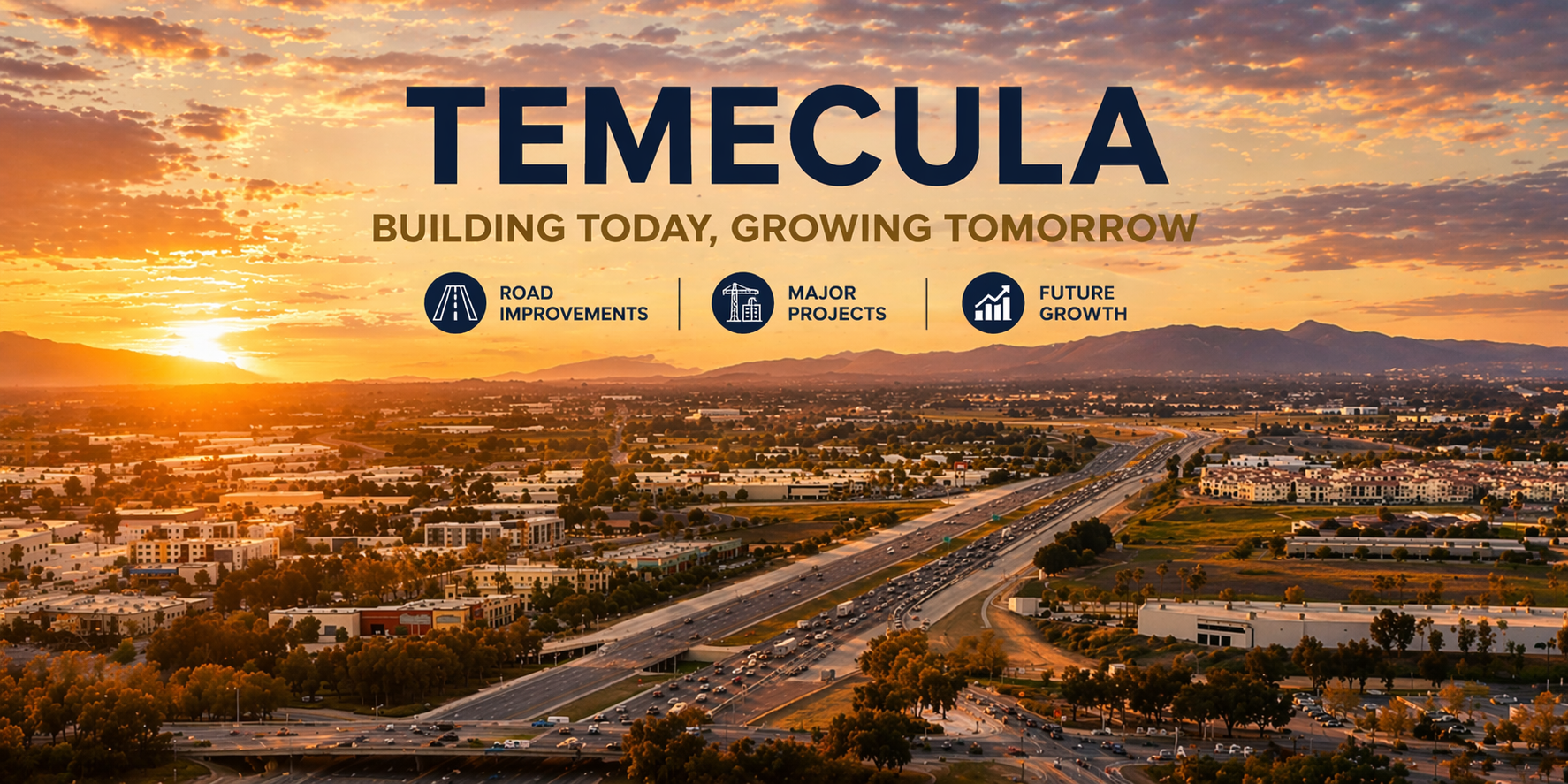
Temecula California Development

Temecula Infrastructure Development: Major Projects, Road Improvements, and Future Growth

Over the past three decades, the City of Temecula, California has grown from a small community into one of the fastest-growing cities in Southwest Riverside County. Located along the Interstate 15 corridor between San Diego and the Inland Empire, Temecula has become an important residential, commercial, and tourism hub in Southern California.

Population growth, expanding tourism in Temecula Valley Wine Country, and increased regional commuting have created significant demand for improved infrastructure throughout the city. In response, Temecula and regional agencies have invested in roadway upgrades, freeway improvements, sewer infrastructure expansion, and flood control projects designed to support long-term growth.


Why Infrastructure Development Matters in Temecula

Temecula sits along Interstate 15, a major north-south transportation corridor connecting Riverside County with San Diego County. Thousands of commuters travel through the Temecula Valley every day, placing pressure on local road networks and freeway infrastructure.

Meanwhile, Temecula Valley Wine Country continues to grow as a major tourism destination. Supporting both residents and visitors requires continued investment in transportation systems, utilities, and environmental infrastructure.

The city prioritizes these projects through its long-term Capital Improvement Program (CIP), which identifies infrastructure investments designed to support population growth and economic development.


Interstate 15 Transportation Improvements

Transportation improvements along Interstate 15 represent some of the most significant infrastructure investments affecting Temecula.

I-15 Congestion Relief Project

This project added an auxiliary lane between the Temecula Parkway on-ramp and the Rancho California Road off-ramp. The improvement helps vehicles merge and exit the freeway more safely while improving traffic flow during peak commuting hours.

Smart Freeway Traffic Management

Regional transportation agencies have implemented smart traffic systems designed to regulate how vehicles enter the freeway and maintain smoother traffic flow.

  • Coordinated ramp metering systems
  • Traffic monitoring cameras and sensors
  • Real-time traffic management technology
  • Communication systems linking freeway entrances

These improvements help reduce congestion and improve travel reliability along the Interstate 15 corridor.


French Valley Parkway Interchange Improvements

The French Valley Parkway interchange project represents one of the largest transportation initiatives affecting the Temecula area.

Historically, the Winchester Road interchange created severe congestion because multiple freeway ramps merged within a short distance. Improvements introduced a collector-distributor lane system that separates entering and exiting traffic from through-traffic on Interstate 15.

Future phases may include:

  • Additional ramp connections
  • Expanded parkway lanes
  • Improved freeway bridge structures
  • Enhanced access to surrounding communities

Local Road Expansion Projects

Ynez Road Corridor Improvements

Ynez Road serves as one of Temecula’s primary north-south corridors connecting residential neighborhoods with commercial centers.

Planned improvements include:

  • Roadway widening
  • New sidewalks and pedestrian infrastructure
  • Dedicated bicycle lanes
  • Landscaped medians
  • Updated traffic signals

Overland Drive Widening Project

The Overland Drive widening project focuses on improving access to commercial and industrial areas of Temecula while reducing congestion for commuters traveling through the area.


Temecula Valley Wine Country Infrastructure Expansion

Temecula Valley Wine Country has become one of Southern California’s most popular tourism destinations. However, much of the area historically relied on septic systems rather than centralized sewer infrastructure.

Regional water agencies are expanding sewer infrastructure throughout the region in order to:

  • Protect groundwater resources
  • Support wineries and hospitality businesses
  • Allow responsible tourism development
  • Improve long-term environmental sustainability

Flood Control and Environmental Restoration

Flood protection is another important component of infrastructure development in the Temecula region. Projects such as the Murrieta Creek Flood Control and Environmental Restoration Project are designed to improve flood safety while restoring natural habitats and expanding recreational opportunities along the creek corridor.


Future Infrastructure Projects Being Considered

As Temecula continues to grow, city planners and regional agencies are evaluating additional infrastructure improvements including:

  • Additional freeway interchange improvements
  • Expanded road connections in developing neighborhoods
  • Stormwater and flood control upgrades
  • Expanded sewer and water service
  • Transportation improvements near Old Town and Wine Country

Conclusion

Infrastructure development plays a critical role in supporting Temecula’s continued growth. Investments in transportation networks, utilities, and environmental infrastructure help ensure the city can accommodate population growth while maintaining quality of life for residents.

Through long-term planning and partnerships with regional agencies, Temecula continues working to improve mobility, public safety, and sustainability throughout the community.


Disclaimer

The information provided in this article is intended for general informational purposes only. While efforts have been made to ensure accuracy, infrastructure projects, timelines, funding availability, and development plans may change over time. Information presented here is believed to be reliable but is not guaranteed. Readers should consult official city, county, or regional agency sources for the most current project updates and details.

7 Ways to Get Rid of Ants around your home.

Kitchen Countertop Options

FHA Loan Limits for California 2026

fha

FHA Loan Limits for California by County, 2026


County 1-Unit 2-Unit 3-Unit 4-Unit
Alameda $1,249,125 $1,599,375 $1,933,200 $2,402,625
Alpine $736,000 $942,200 $1,138,900 $1,415,400
Amador $541,287 $693,050 $837,700 $1,041,125
Butte $541,287 $693,050 $837,700 $1,041,125
Calaveras $541,287 $693,050 $837,700 $1,041,125
Colusa $541,287 $693,050 $837,700 $1,041,125
Contra Costa $1,249,125 $1,599,375 $1,933,200 $2,402,625
Del Norte $541,287 $693,050 $837,700 $1,041,125
El Dorado $764,750 $979,000 $1,183,400 $1,470,700
Fresno $541,287 $693,050 $837,700 $1,041,125
Glenn $541,287 $693,050 $837,700 $1,041,125
Humboldt $541,287 $693,050 $837,700 $1,041,125
Imperial $541,287 $693,050 $837,700 $1,041,125
Inyo $541,287 $693,050 $837,700 $1,041,125
Kern $541,287 $693,050 $837,700 $1,041,125
Kings $541,287 $693,050 $837,700 $1,041,125
Lake $541,287 $693,050 $837,700 $1,041,125
Lassen $541,287 $693,050 $837,700 $1,041,125
Los Angeles $1,249,125 $1,599,375 $1,933,200 $2,402,625
Madera $541,287 $693,050 $837,700 $1,041,125
Marin $1,249,125 $1,599,375 $1,933,200 $2,402,625
Mariposa $541,287 $693,050 $837,700 $1,041,125
Mendocino $546,250 $699,300 $845,300 $1,050,500
Merced $541,287 $693,050 $837,700 $1,041,125
Modoc $541,287 $693,050 $837,700 $1,041,125
Mono $776,250 $993,750 $1,201,200 $1,492,800
Monterey $994,750 $1,273,450 $1,539,350 $1,913,000
Napa $1,017,750 $1,302,900 $1,574,900 $1,957,250
Nevada $649,750 $831,800 $1,005,450 $1,249,550
Orange $1,249,125 $1,599,375 $1,933,200 $2,402,625
Placer $764,750 $979,000 $1,183,400 $1,470,700
Plumas $541,287 $693,050 $837,700 $1,041,125
Riverside $690,000 $883,300 $1,067,750 $1,326,950
Sacramento $764,750 $979,000 $1,183,400 $1,470,700
San Benito $1,249,125 $1,599,375 $1,933,200 $2,402,625
San Bernardino $690,000 $883,300 $1,067,750 $1,326,950
San Diego $1,104,000 $1,413,350 $1,708,400 $2,123,100
San Francisco $1,249,125 $1,599,375 $1,933,200 $2,402,625
San Joaquin $678,500 $868,600 $1,049,950 $1,304,850
San Luis Obispo $1,000,500 $1,280,850 $1,548,250 $1,924,100
San Mateo $1,249,125 $1,599,375 $1,933,200 $2,402,625
Santa Barbara $941,850 $1,205,750 $1,457,450 $1,811,300
Santa Clara $1,249,125 $1,599,375 $1,933,200 $2,402,625
Santa Cruz $1,249,125 $1,599,375 $1,933,200 $2,402,625
Shasta $541,287 $693,050 $837,700 $1,041,125
Sierra $541,287 $693,050 $837,700 $1,041,125
Siskiyou $541,287 $693,050 $837,700 $1,041,125
Solano $685,400 $877,450 $1,060,600 $1,318,100
Sonoma $897,000 $1,148,350 $1,388,050 $1,725,050
Stanislaus $545,100 $697,800 $843,500 $1,048,300
Sutter $541,287 $693,050 $837,700 $1,041,125
Tehama $541,287 $693,050 $837,700 $1,041,125
Trinity $541,287 $693,050 $837,700 $1,041,125
Tulare $541,287 $693,050 $837,700 $1,041,125
Tuolumne $541,287 $693,050 $837,700 $1,041,125
Ventura $832,750 $1,035,000 $1,325,000 $1,601,600
Yolo $764,750 $979,000 $1,183,400 $1,470,700
Yuba $541,287 $693,050 $837,700 $1,041,125

VA Loans in 2026

VA Logo

2026 VA Loan Limits in California

VA loan limits in California for 2026 follow the conforming loan limits set by the
Federal Housing Finance Agency (FHFA). These limits primarily affect borrowers who have
partial VA entitlement. If you have full VA entitlement, there is no official loan limit — you can borrow as much as your lender approves without a down payment.


How VA Loan Limits Work in 2026

Full Entitlement

  • No VA loan limit cap
  • No down payment required (if lender approves)
  • Limited only by your income, credit, and lender guidelines

Partial Entitlement

  • County loan limits apply
  • If you exceed the county limit, a down payment may be required
  • Typically 25% of the amount above the county limit

2026 California VA Loan Limits (1-Unit Properties)

County Type 2026 Loan Limit
Standard Counties $832,750
High-Cost Counties (Los Angeles, Orange, San Francisco, Santa Clara, San Mateo, Marin, etc.) $1,249,125
San Diego County $1,104,000
Ventura County $1,035,000
San Luis Obispo County $1,000,500
Napa County $1,017,750
Monterey County $994,750
Santa Barbara County $941,850
Sonoma County $897,000

Note: Multi-unit properties (2–4 units) have higher loan limits. Limits vary by county and property type.


What This Means for California Homebuyers

  • If you have full entitlement, you can purchase above these limits with no down payment (subject to lender approval).
  • If you have partial entitlement, you may need a down payment if the purchase price exceeds your county’s limit.
  • High-cost California counties allow significantly higher borrowing compared to standard counties.

Important Reminder

VA loan limits are based on FHFA conforming loan limits and can change annually.
Always verify your eligibility and county limits with your lender before applying.

Need help determining your entitlement or county limit?
Contact a VA-approved lender to review your Certificate of Eligibility (COE) and confirm your maximum loan amount.
Contact James Gross at Franklin Loan Center (951) 760-8169 and tell him Sean ONeil referred you.