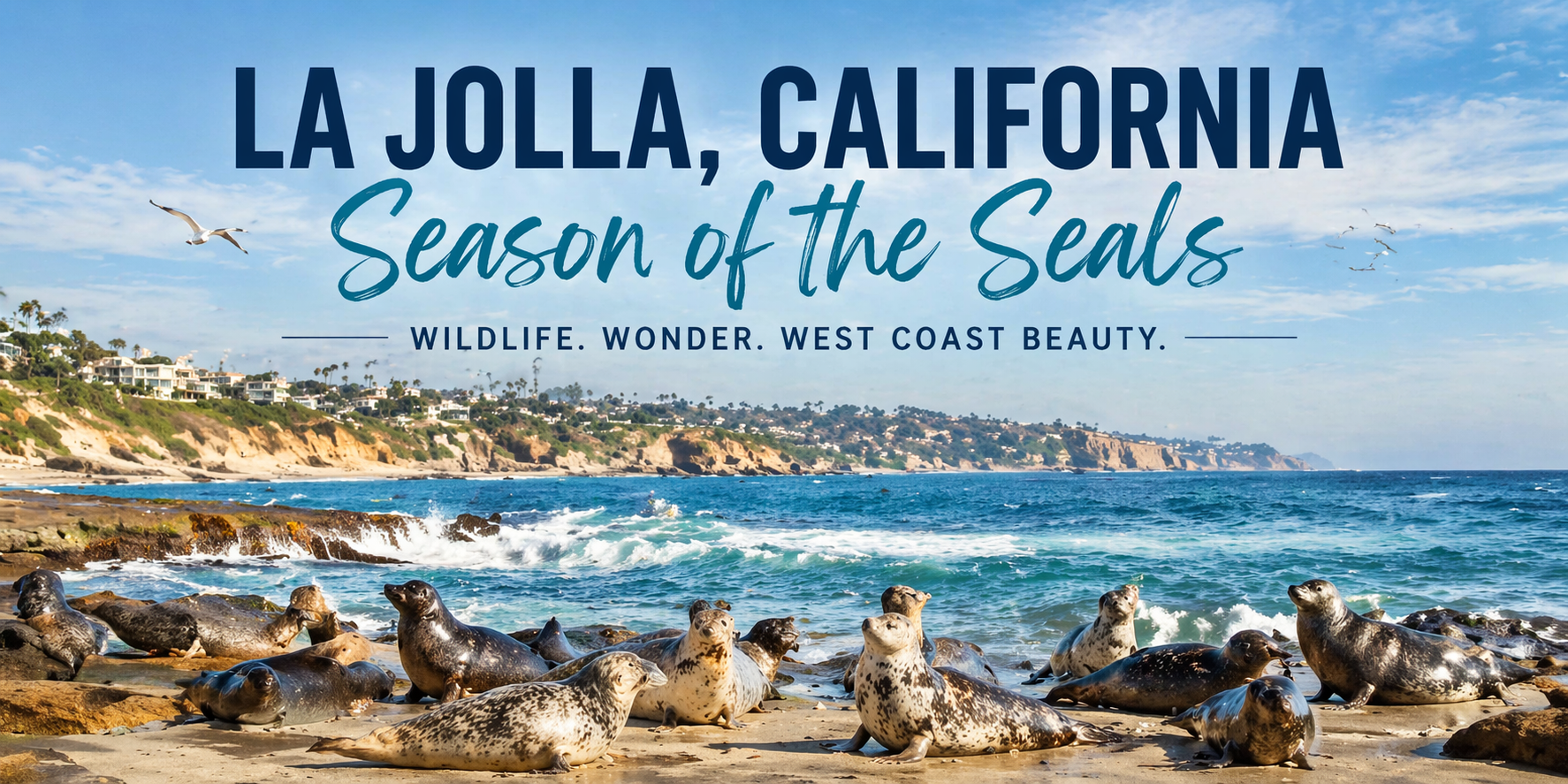
Each year along the picturesque coastline of La Jolla, a remarkable natural rhythm unfolds as harbor seals return to the sandy shores of the Children’s Pool and surrounding coves. Typically arriving in greater numbers between late December and March, these marine mammals follow long-established migratory and breeding patterns tied to water temperature, food availability, and instinctual pupping cycles. While some seals remain year-round, winter and early spring mark the peak of activity, when the shoreline transforms into a nursery bustling with life.
During pupping season, female harbor seals give birth to their young on land, favoring protected beaches where waves are gentle and human disturbance can be minimized. Newborn pups are able to swim within hours, but they spend much of their early days resting on the sand, nursing and gaining strength. Adult seals alternate between foraging trips offshore and resting periods on land, a behavior known as “hauling out.” Their diet consists mainly of fish, squid, and crustaceans, which they hunt with impressive agility beneath the surface.
Socially, the seals exhibit a mix of calm communal living and subtle territorial behavior. Large groups can often be seen lounging together, stacked side-by-side in the sun, occasionally vocalizing with soft grunts or barks. Mothers are attentive but not overly protective, relying on instinct and proximity rather than constant contact. Despite their seemingly relaxed demeanor, seals remain highly aware of their surroundings, quickly retreating to the water if they perceive threats.
Human interaction has become a defining aspect of La Jolla’s seal population. Visitors from around the world gather to observe the animals, especially during pupping season. While this creates a unique opportunity for wildlife appreciation, it also requires careful balance. Regulations and guidelines encourage people to keep a respectful distance, as disturbances can separate mothers from pups or force seals into the water prematurely. Lifeguards and conservation groups often monitor the area to ensure both human safety and animal welfare.
By late spring, as pups grow stronger and more independent, the density of seals along the shore begins to decrease. Many disperse along the California coast, though a consistent population remains in La Jolla throughout the year. What makes this seasonal gathering so special is not just the number of animals, but the rare accessibility of observing a complete life cycle—from birth to early independence—set against one of Southern California’s most scenic backdrops. It’s a vivid reminder of the delicate coexistence between urban coastal life and enduring natural traditions.
If you’re inspired by the beauty and lifestyle of coastal living in La Jolla and want to explore what it’s like to call this incredible area home, reach out to Sean ONeil, Broker. Call or text (951) 285-6777 to learn more.